
Field Notes · October 16, 2026 · 7 min read
Fixed Price, Cost-Plus or Time and Materials: How Contractors Price a Remodel
The three ways a remodel gets priced, what each one moves onto you, why bids that look cheaper often aren't, and which fits a kitchen, a bath or an older house.
Three remodel bids are rarely three prices for the same thing. More often they are three different ways of deciding who pays when the wall comes down and there is something behind it. Understanding that is worth more than haggling over any of the numbers.
Fixed price
One number for a defined scope. If the sink base turns out to be rotten or the panel is undersized, that is the contractor’s problem — which is exactly why a fixed bid includes a contingency you cannot see. You pay for that risk whether or not it materialises.
It works well when the scope is genuinely fixed and the house is recent enough that the walls hold few surprises: the 1980s–2000s builder stock through Bothell and Lynnwood, say. It works badly when the scope is vague, because every ambiguity becomes a change order at a rate you did not negotiate.
Cost-plus
You pay actual labour and materials plus an agreed fee — commonly 15–25% — and you see the invoices. When nothing goes wrong you keep the contingency a fixed bid would have charged. When something does, you pay what it actually cost to fix rather than a change-order premium.
The risk moves to you, so the protection is a not-to-exceed cap and an itemised estimate up front. Cost-plus without a cap is a blank cheque; with one it is usually the fairest structure for older houses, where honest contractors cannot know what they will find until demolition.
Time and materials
Cost-plus without a defined scope: an hourly rate, materials at cost or cost-plus, no total. Right for open-ended repair — chasing a leak, remediating rot of unknown extent — and wrong for a whole kitchen, where the absence of a number is the absence of a plan.
Why the low bid is usually the expensive one
A fixed bid well below the others has almost never found a cheaper way to do the same work. It has priced less of it. The missing scope arrives later as change orders, and the markup on change orders is where a low-bid contractor makes the margin back. Our twelve questions include asking for the change-order rate in writing before you sign; this is why.
Matching the structure to the house
- Newer stock, clear scope — fixed price. Builder-era kitchens and baths with modern systems behind them are predictable; you should get a firm number.
- Older stock, interior remodel — cost-plus with a cap. The 1920s–60s houses in Seattle, the Edmonds Bowl and early Everett hide galvanised plumbing, knob-and-tube and out-of-level floors that nobody can price blind.
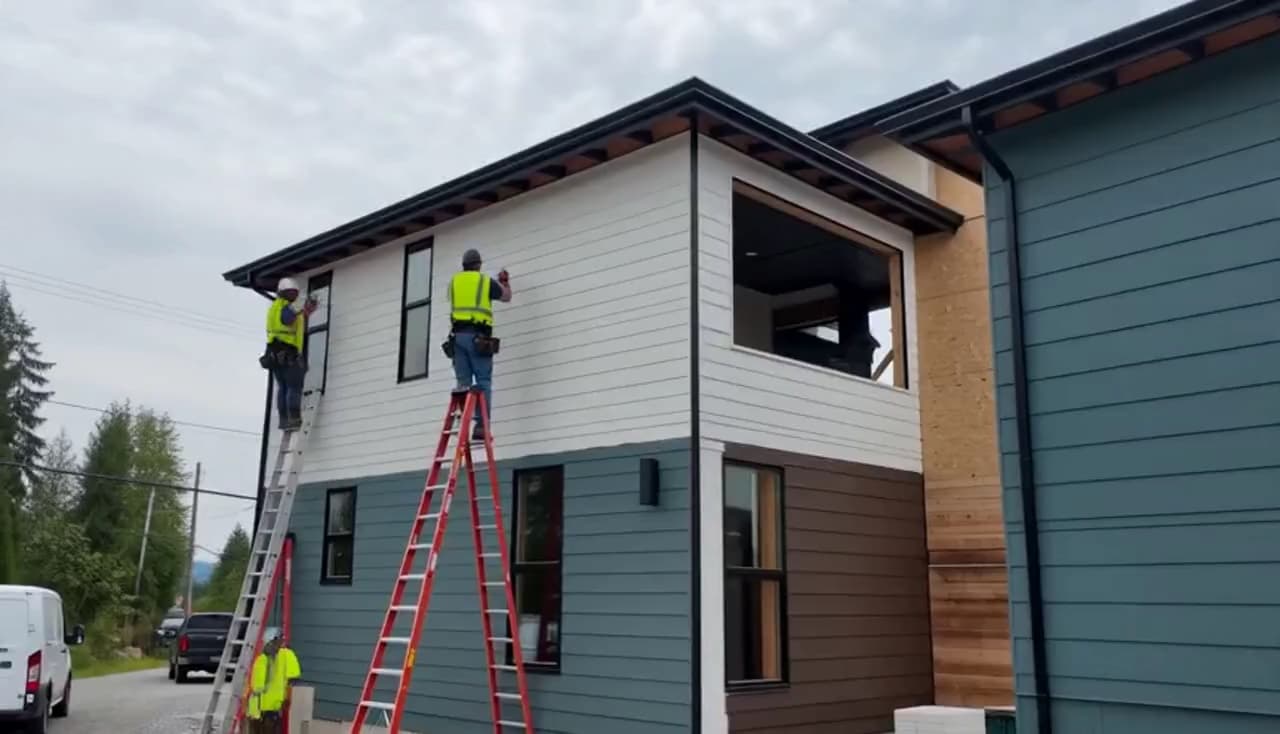
- Exterior and repair work — fixed price with a stated rot allowance and an hourly rate above it, which is how we quote siding and roof repair.
- Ground-up and additions — fixed price against complete drawings. If the drawings are not complete, the price cannot be either.
What every version needs
- A written scope and drawings, not a conversation
- A schedule of finishes with every allowance named and priced
- Who pulls the permit and meets the inspector
- Payments tied to milestones, not calendar dates
- The change-order procedure and its markup, in writing
- The warranty, and who is accountable when trades overlap
How to budget a remodel covers contingency from your side of the table, and choosing a contractor in Washington covers the licence and insurance checks that come before any of this.
How we price it
We quote fixed price where the scope allows and say so plainly where it does not, with a named allowance and rate for what the tear-out may find. The free estimate is itemised, across Snohomish and King County, and you can compare it line by line against anyone else’s.
Frequently asked questions
- What is the difference between fixed price and cost-plus?
- Fixed price is one number for a defined scope; the contractor carries the risk of what the walls hide and prices that risk in. Cost-plus bills actual labour and materials plus an agreed fee — typically 15–25% — so you pay what it really cost and carry the surprises yourself. Time and materials is cost-plus without a defined scope, suited to open-ended repair work.
- Which contract type is cheapest?
- Usually none of them, over a whole project. Fixed price includes a contingency you pay whether or not it is used; cost-plus returns that contingency when nothing goes wrong and charges it when something does. A fixed bid that is far lower than the others has generally priced less scope, not less risk — which is where change orders come from.
- Which one should I use for a kitchen or bathroom remodel?
- Fixed price when the scope is clear and the house is recent enough that the walls hold few surprises. Cost-plus with a not-to-exceed cap on older stock — 1920s–1960s Seattle, Edmonds Bowl, early Everett — where the plumbing, wiring and framing behind the tile are genuinely unknown until demolition.
- What should any remodel contract include regardless of type?
- A written scope and drawings, a schedule of finishes with allowances named, who pulls the permit, a payment schedule tied to milestones rather than dates, the change-order procedure and markup, and the warranty. A contract missing any of those is the expensive kind whatever the headline number says.
Written by
Eduard — Owner & General Contractor
Eduard owns ENF General Contractors and has built and remodeled homes across Everett, Seattle & the Eastside for more than fifteen years. Licensed, Bonded & Insured. He runs every ENF project personally — and writes these guides from the job site. More about Eduard · (425) 217-9921