
Field Notes · September 11, 2026 · 7 min read
What Siding Replacement Costs in the Seattle Area
Siding replacement and renovation costs around Seattle in 2026: fiber cement, engineered wood and cedar per square foot, rot repair, and why flashing matters.
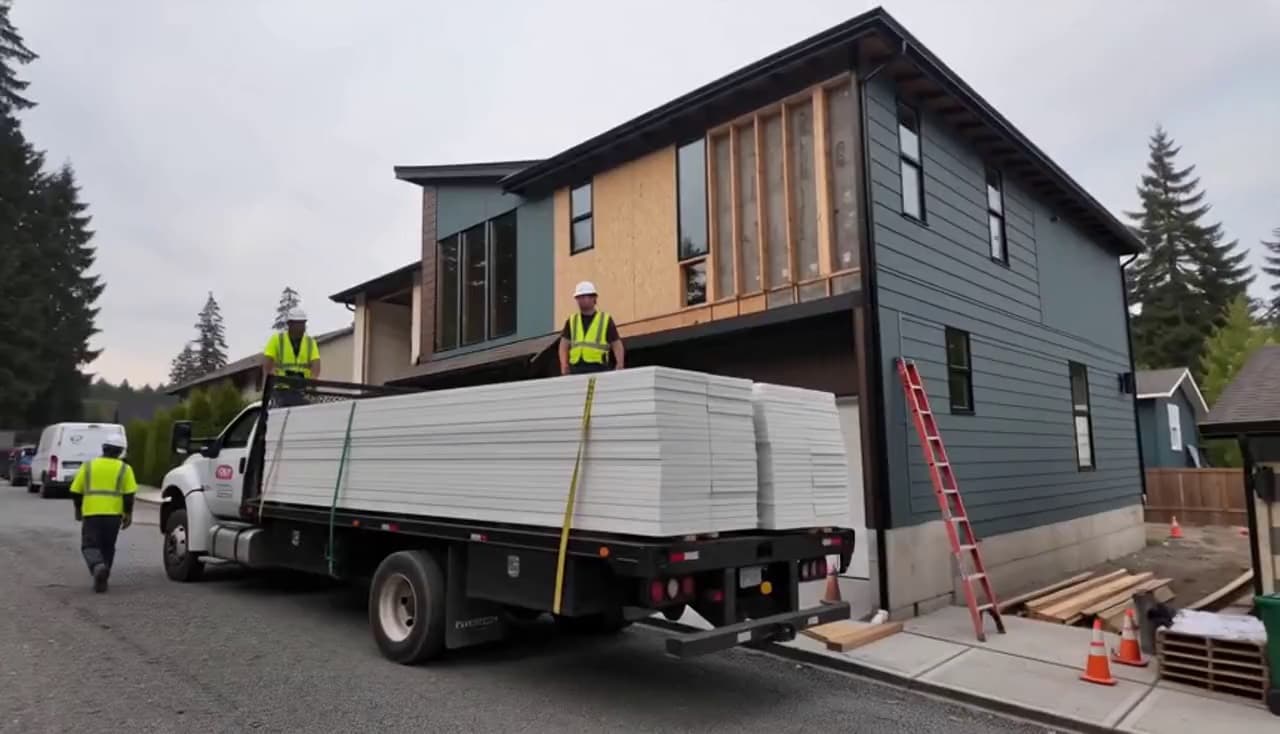
Siding is the least glamorous large expense in homeownership and one of the most consequential. In a region that delivers rain eight months a year, it is not decoration — it is the system keeping water out of your framing. Here is what replacing it actually costs around Seattle, and where the money goes.
The per-square-foot numbers
- Repair and partial replacement: $3,000–$15,000. Targeted rot repair, failed sections, flashing correction. Worth doing when the rest of the cladding has real life left.
- Fiber cement or engineered wood: $12–$22/sq ft. Full tear-off, weather-resistive barrier, flashing, rain screen where appropriate, new cladding and trim. The regional default.
- Cedar and specialty: $18–$30+/sq ft. Cedar lap or shingle, custom profiles, multi-material elevations.
A typical 2,000 sq ft house therefore lands around $25,000–$50,000. Larger or more complex elevations — multiple gables, tall two-story faces, mixed materials — push higher simply because there is more wall and more trim.
Replacement, renovation or repair?
People use these interchangeably and contractors do not, which is one reason bids are hard to compare. Repair fixes failed sections and leaves the rest. Renovationusually means the whole exterior reworked — new cladding, trim and flashing, often with windows and paint — which is what most people asking about siding renovation cost actually want. Replacement is the cladding and the weather barrier behind it, and it is the number this guide prices. A full exterior renovation lands above it once windows and trim are included.
Why siding actually fails here
Almost every failure we tear off traces to water management, not the cladding. Missing or reversed flashing at windows and decks, no drainage plane behind the siding, housewrap lapped the wrong way, penetrations sealed with caulk instead of flashed. The siding gets blamed; the details were the problem.
That is why a quote should describe a system, not a product. Weather barrier, flashing at every opening and penetration, and on most homes a rain screen gap so the wall can dry outward. Our siding page walks through how we build it.
What the tear-off reveals
Removing siding is the only time anyone sees your sheathing. On older homes we routinely find rot at deck ledgers, beneath windows and along the base of walls where grade has crept up. Finding it with the wall open is the cheap version — the same damage discovered later, from the inside, costs far more.
Budget for it the way you would any older-home project: the 10–15% contingency exists precisely for what walls hide.
What it costs by neighborhood stock
The housing tells you what to expect. Everett and Lynnwood are full of 1970s–80s T1-11 and hardboard that is simply finished — straightforward tear-offs, frequent rot at the sill plate. Bellevue’s larger 1980s elevations cost more because there is more wall. Seattle adds character-matching to the equation, and exposed Edmonds and Mukilteo homes weather faster on the water-facing side.
Which cladding, though?
Cost is only half the decision. Fiber cement, engineered wood and cedar each behave differently on a wall that stays damp for eight months a year, and the rain screen behind them often matters more than the choice itself — comparing the three materials covers how each holds up here.
Pair it with the roof if both are due
Roof-to-wall flashing is a shared detail. Doing roofing and siding together means one crew owns that intersection instead of two trades pointing at each other — and it saves a second mobilization and a second round of disruption.
Get a number for your walls
Square footage, trim complexity, access and the condition behind the cladding decide the real price. The free estimate covers all four, in writing.
If the damage is concentrated under a gutter line rather than spread across the wall, what blocked gutters damage explains what you are probably looking at.
Not sure the wall is at that point yet? Does my siding need replacing covers the signs that separate a repair from a re-side.
Frequently asked questions
- How much does siding replacement cost in the Seattle area?
- Fiber cement and engineered wood typically run $12–$22 per square foot installed in 2026, including tear-off, weather barrier and flashing. Cedar and specialty profiles run $18–$30+. A typical 2,000 sq ft house lands roughly $25,000–$50,000 depending on cladding, trim complexity and how much rot the tear-off finds.
- What is the best siding for Washington's climate?
- Fiber cement is the regional default — dimensionally stable, fire-resistant and it holds paint through our wet-dry cycling. Engineered wood gives a warmer look with easier handling. What matters more than the product is what sits behind it: weather barrier, flashing at every penetration, and a drainage gap.
- How much does rot repair add to a siding job?
- It varies with what the tear-off reveals. Isolated repair around a window or deck ledger might add $1,000–$4,000; widespread sill-plate or sheathing rot can add $10,000 or more. An honest contractor quotes the visible scope and carries a contingency rather than quoting low and issuing change orders.
- Is a rain screen worth the extra cost?
- In this climate, on most homes, yes. The drainage gap lets the wall assembly dry outward instead of holding moisture against the sheathing, and it is the single biggest factor in whether siding lasts decades or fails early. It adds modestly to the job and materially to its life.
Written by
Eduard — Owner & General Contractor
Eduard owns ENF General Contractors and has built and remodeled homes across Everett, Seattle & the Eastside for more than fifteen years. Licensed, Bonded & Insured. He runs every ENF project personally — and writes these guides from the job site. More about Eduard · (425) 217-9921