Field Notes · September 21, 2026 · 6 min read
Tub-to-Shower Conversion: What It Costs and What to Choose
Tub-to-shower conversion cost in the Seattle area: prefab vs. tiled vs. curbless, the plumbing and waterproofing that set the price, and when to keep a tub.
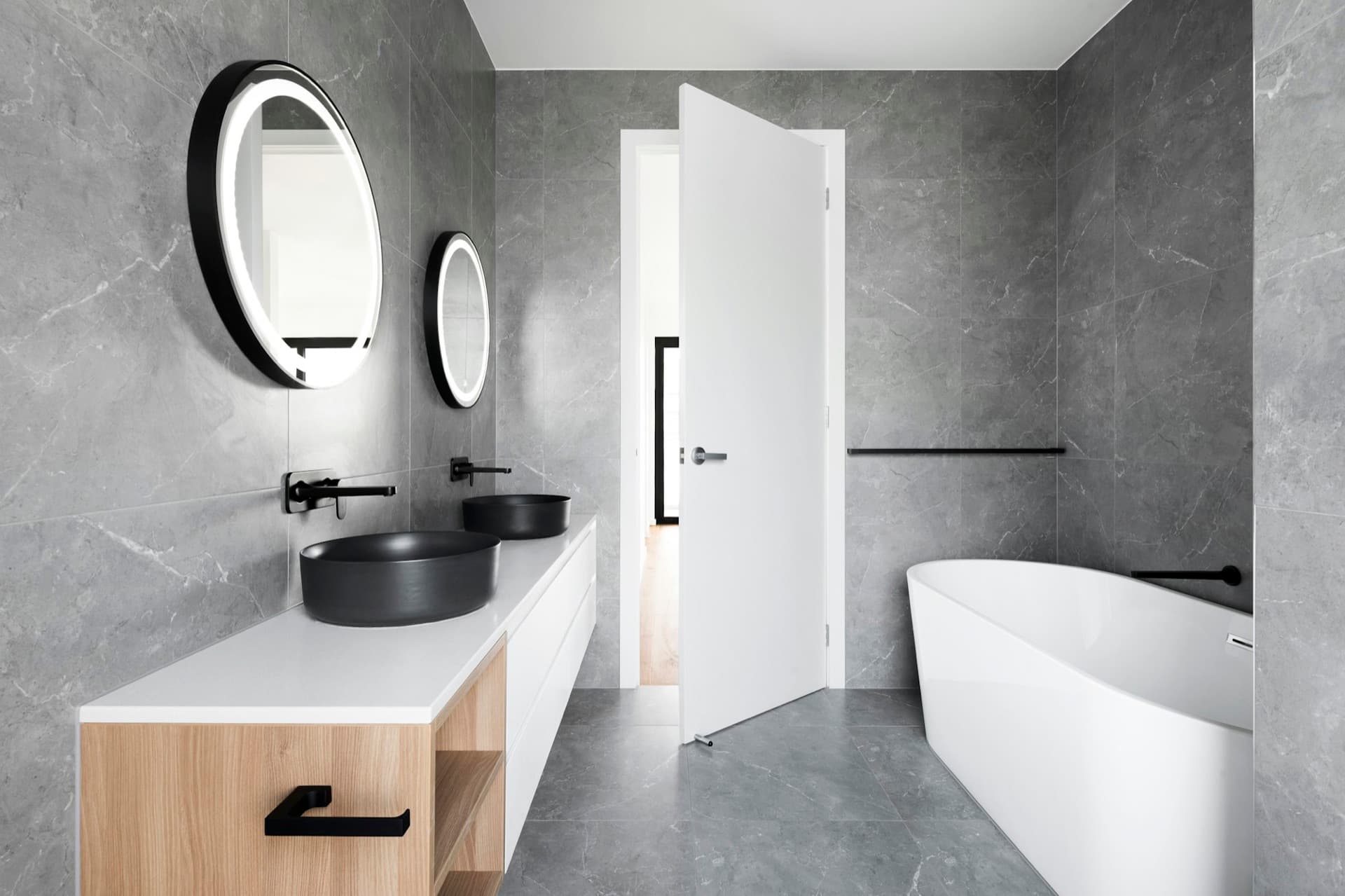
Of everything we build in bathrooms, the tub-to-shower conversion is the one homeowners are most surprised by — both by how much better the room works afterward and by how wide the price range is. The same three words describe a $7,000 job and a $35,000 job. Here is what separates them.
The three ways to do it
- Prefab walk-in unit (roughly $6k–$12k). The old tub comes out and a one-piece or multi-piece acrylic shower base and surround go into the same footprint, usually on the existing drain. Fast, watertight by design, and the least expensive way to get a step-in shower. The trade-off is the look: it is a plastic box, and it will always read as one.
- Tiled shower, same footprint (roughly $12k–$25k). A proper pan, sloped and waterproofed, tile on the walls and floor, a new valve, and either a curb or a low threshold. This is the version most of our clients choose. The range inside it is mostly tile choice and whether the valve and drain move.
- Curbless tiled shower (roughly $20k–$35k+). No step at all: the floor structure is recessed or built up so the slope runs to a linear drain, with frameless glass, a bench and a niche. It is the best-looking and the best-aging version, and it is more construction than it appears, which is why it costs what it does.
These are typical 2026 ranges for the Seattle, Eastside and Snohomish County market, not quotes. If the vanity, floor, lighting and toilet are being replaced in the same project, use the bathroom remodel cost guide instead — at that point the shower is a line item in a bigger number.
What actually decides the price
A standard tub occupies a 60-inch alcove, and most conversions keep that exact footprint. Within it, four things move the budget:
- The drain. A tub drain sits at one end. A tiled shower wants its drain where the slope makes sense — centered, or at one wall for a linear drain. Moving it means opening the floor, which is easy over a crawlspace and basement and harder over a finished ceiling.
- The valve. A tub filler and a shower valve are not the same rough-in. Nearly every conversion gets a new valve; adding a handheld, a second head or body sprays adds plumbing behind the wall while it is open.
- Waterproofing and inspection. This is the part you cannot see and the part that decides whether the shower is still dry in fifteen years. A sheet or liquid membrane, a properly sloped pre-slope under the pan, sealed corners and a flood test before tile. It is also where inspectors look, and we build for that rather than around it.
- Tile and glass. Large-format porcelain is durable and mid-priced. Natural stone and mosaics cost more to buy and more to set. A frameless glass panel or door is measured only after tile is complete and typically runs $1,500–$4,000 installed.
Curbless: worth it, but know what it involves
A curbless shower needs the floor to slope to the drain with no lip to hold the water in. In new construction that is a framing detail. In an existing bathroom it means either recessing the subfloor between the joists or raising the rest of the bathroom floor to meet the shower — and the linear drain and larger waterproofed area follow from that.
It is our favorite upgrade regardless, for the reason covered in the aging-in-place guide: a curbless entry removes the most common trip point in the house and never looks like a medical fixture. If anyone in the household is going to be there in twenty years, build it once.
Should you keep a tub somewhere?
The honest resale answer: a house with no bathtub at all is a harder sell to families with small children. If the bathroom you are converting is the only one with a tub, think about it. If a hall bath keeps its tub and the primary bath gets the shower, or the house has three bathrooms, there is no downside — that is the configuration most buyers want.
A freestanding tub plus a separate shower in a primary suite is a different project and a different budget; the bathroom remodeling page covers the tiers.
Permits and what to expect during the work
Drain and valve changes, a new fan or circuit and the shower waterproofing all require permits and inspection in Snohomish and King County — the kitchen and bath permit guide walks through the triggers. A prefab unit set on the existing drain with no plumbing changes is sometimes exempt. Either way we handle the filing.
Plan on three to five days without the shower for a prefab unit and two to three weeks for a tiled one; if it is your only bathroom, tell us up front and we sequence it so the toilet is out of service for hours, not days. Custom glass arrives two to three weeks after tile, and a curtain rod bridges the gap.
Get a real number
We build tub-to-shower conversions across Everett, Seattle and the Eastside, and a written estimate for yours is free and itemized.
Frequently asked questions
- How much does a tub-to-shower conversion cost?
- In the Seattle area in 2026, a prefab acrylic walk-in unit dropped into the old tub footprint typically runs $6,000–$12,000 installed. A custom tiled shower in the same footprint runs $12,000–$25,000. A curbless tiled shower with frameless glass, a bench and a niche runs $20,000–$35,000+. If the rest of the bathroom gets redone at the same time, you are into full bathroom remodel territory instead.
- Does converting a tub to a shower need a permit?
- Usually yes, once you are doing it properly. Moving or resizing the drain, changing the valve rough-in, adding a fan or circuit, and the waterproofing on a tiled shower all trigger permits and inspections in Snohomish and King County. A prefab unit set on the existing drain with no plumbing changes sometimes does not. We pull whichever applies.
- Does removing the only bathtub hurt resale value?
- Removing the last tub in a house can narrow the buyer pool slightly — families with small children still want one somewhere. Converting a second or third bathroom, or a primary bath when a hall bath keeps its tub, has no meaningful downside and is one of the most requested upgrades we build.
- How long does a tub-to-shower conversion take?
- Three to five working days for a prefab unit. Two to three weeks for a tiled shower, because the waterproofing has to cure and be inspected before tile, and the tile has to set before glass can be measured. Custom frameless glass then adds another two to three weeks of lead time, during which the shower is usable with a temporary curtain.
Written by
Eduard — Owner & General Contractor
Eduard owns ENF General Contractors and has built and remodeled homes across Everett, Seattle & the Eastside for over a decade. Licensed, Bonded & Insured. He runs every ENF project personally — and writes these guides from the job site. More about Eduard · (425) 217-9921