
Field Notes · October 12, 2026 · 7 min read
The October Exterior Checklist for a Western Washington House
Ten things to check outside a Puget Sound house before the rain sets in — gutters, roof edges, siding, windows, drainage — and which can wait.
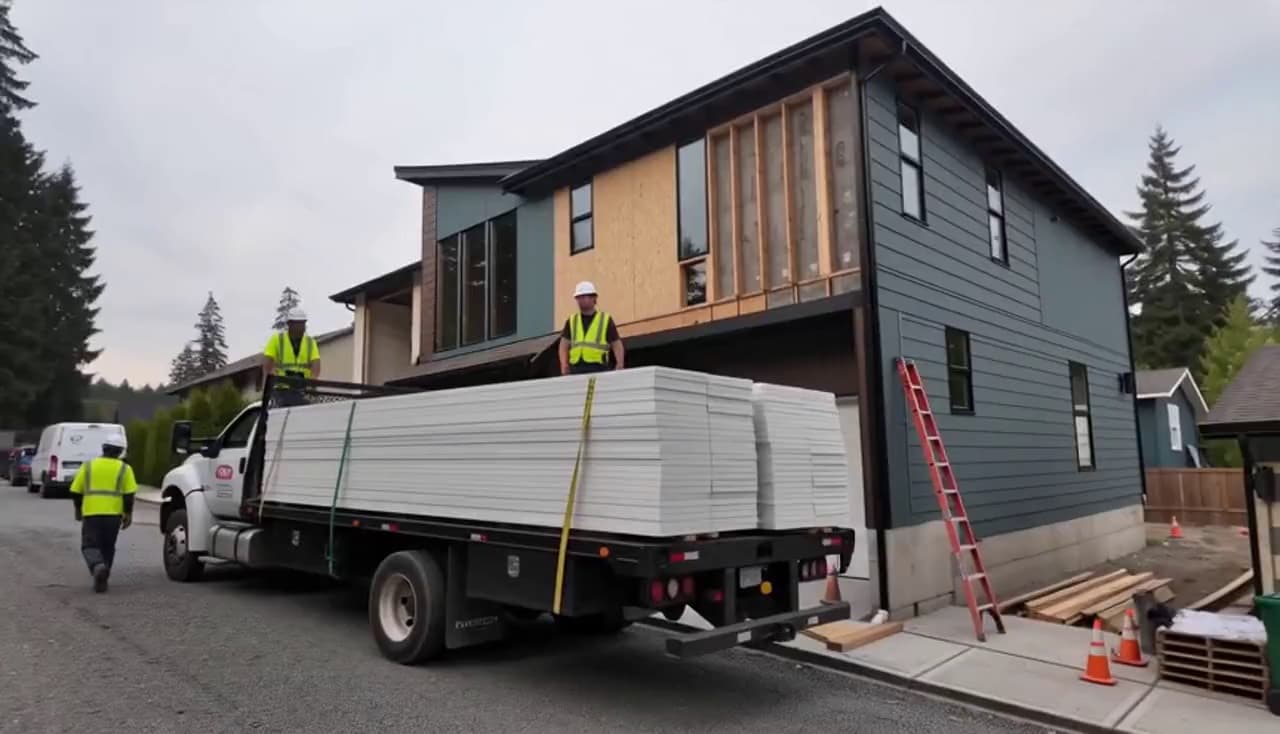
Western Washington has a short window every autumn where the trees have finished dropping and the serious rain has not started. What you find in that window can be fixed dry. The same thing found in December is a tarp and a wait.
Here is what we would look at on our own houses in October, in the order it matters, and what each one costs if it has gone.
1. Watch the gutters in the rain, not the sun
The useful inspection is standing outside during a downpour. Water should leave at the downspouts and nowhere else. Sheeting over the front edge means a blockage or an undersized gutter; dripping behind it means the fascia is already taking it. Both are covered in what blocked gutters actually damage.
2. Follow every downspout to where it ends
A downspout emptying onto soil beside the foundation concentrates exactly the water the whole system exists to move away. On sloped lots that water goes downhill, sometimes into your own lower level. Extensions and splash blocks are a ten-dollar fix; a tight-line to a drain is a proper one.
3. Look along the fascia line for sag and staining
Fascia is often the first wood on a house to rot because the gutter hides it while it stays wet. Dark staining, a gutter pulling away from the house, or a visible sag in the line all mean the board behind has gone soft. Caught now it is a short repair; left a winter it reaches the rafter tails.
4. Check the bottom course of siding
Walk the perimeter and look at the lowest foot of wall, especially under gutter joints and beside downspouts. Swelling, separation at the seams, or paint that has lifted in a vertical stripe are the tells. Hardboard and older composite cladding fail here first. The siding cost guide covers what repair versus a re-side looks like in numbers.
5. Clear the valleys and the roof edge
Under conifer cover, needles pack into roof valleys and hold water there all winter, and a gutter full of wet debris keeps the bottom course of shingles permanently damp. That is where moss establishes and where edges lift. If you can see debris in the valleys from the ground, it needs to come out — by someone with the right footing, not from a ladder in the rain.
6. Look at the flashings, not the field of the roof
Nearly every leak we chase starts at a chimney, a wall intersection, a skylight or a vent — not in the open roof. Binoculars from the ground will show you lifted or rusted flashing, failed sealant, and shingles sitting proud at a transition. If anything looks wrong, roof leak repair covers what that costs and why the stain inside will not be under it.
7. Check the attic after the first heavy rain
Ten minutes with a torch. Look for staining on the underside of the decking, damp insulation, daylight at penetrations, and a bathroom fan venting into the attic instead of outside — which in this climate is depositing a shower’s worth of moisture into your roof structure every day.
8. Windows: sills, corners and condensation
Press the exterior sill and the lower corners of the frame. Soft means water has been getting behind the trim. Inside, fogging between the panes means the seal has failed and that unit is doing little thermally. Neither is an emergency; both belong on the list for the dry season. Window replacement cost sets out insert versus full-frame.
9. Decks and ledgers
The deck ledger — where the deck bolts to the house — penetrates the wall at exactly the height water likes to sit. Look for staining on the siding directly below it and probe the ledger itself. A ledger that has rotted is a structural problem, not a cosmetic one.
10. Grade and drainage against the house
Soil, mulch or planters piled against the siding hold moisture against the bottom course and bridge the gap the cladding is meant to keep. Ground should fall away from the house. Where it does not, water has nowhere to go but in.
What it costs, when it has gone
- Fascia and soffit repair: $800–$3,500 localised
- Flashing and localised roof repair: $800–$5,000
- Gutter replacement: $8–$15 per linear foot in seamless aluminium
- Siding repair where overflow hit: $3,000–$15,000
- Full re-side: $12–$22 per square foot
The pattern in those numbers is the argument for October. Each one is a small repair if it is found before the rain and a large one if it is found after.
Get the list checked
If you would rather have someone who does this every week walk the house, we work across Snohomish and King County on roofing, gutters, siding and windows, and will tell you plainly what needs doing now and what can wait for a dry season.
Frequently asked questions
- When should I do fall exterior maintenance in Western Washington?
- October, before the sustained rain arrives. Searches for gutter cleaning peak here every October and November and roof-leak searches peak from November through March — that sequence is the weather telling you the order. Anything you find in October can still be fixed in dry conditions; the same problem found in December usually cannot.
- What are the most important things to check?
- Where water goes. Gutters that overflow, downspouts that discharge against the foundation, soft or stained fascia, and any siding that is swollen or separating at the bottom course. Those four cause most of the winter damage we get called to repair, and all four are visible from the ground in the rain.
- Can I do this inspection myself?
- Most of it, from the ground, with a torch and a dry day followed by a wet one. Stay off the roof — wet moss on a pitched roof is as slick as ice. Anything that needs a ladder on a two-storey house or a look under shingles is worth having someone do who does it every week.
- What can wait until spring?
- Cosmetic paint on sheltered elevations, deck refinishing, and most fence work. Anything that is actively letting water into the structure — roof, flashing, failed siding, blocked drainage — cannot, because the cost of a wet winter compounds in a way the repair does not.
Written by
Eduard — Owner & General Contractor
Eduard owns ENF General Contractors and has built and remodeled homes across Everett, Seattle & the Eastside for more than fifteen years. Licensed, Bonded & Insured. He runs every ENF project personally — and writes these guides from the job site. More about Eduard · (425) 217-9921